 BACK
BACK
What is CareShield Life and do I Need to Buy a Supplement on Top of it?
- August 16, 2026
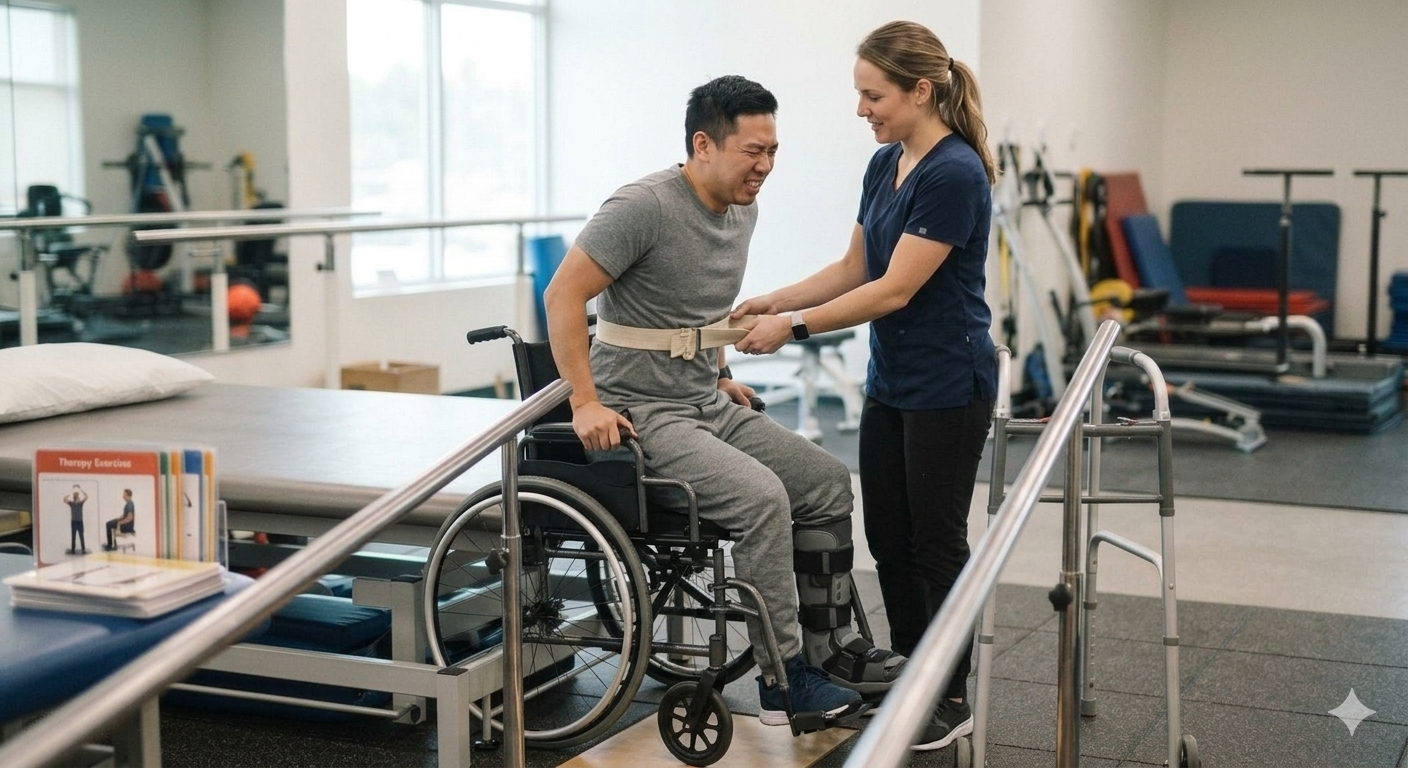
No one likes the inconvenience and loss of privacy when another person has to help one for toileting, showering, changing or even move from one point to another. But should that unfortunate event happens, financial commitments may increase while this person may lose his ability to take home the same income before the disability. That is when a long term care insurance like CareShield Life and its supplementary coverage from private insurers kicks in.
CareShield Life Gives You a Foundation. Here's Why Many Singaporeans Choose to Build On It
Nobody likes to think about becoming severely disabled one day — unable to wash, dress, or feed themselves without help. But according to the Central Provident Fund (CPF) Board, one in two Singapore Residents is expected to develop severe disability at some point in their lifetime, whether through a sudden event like a stroke, or the slow progression of a chronic condition or age-related illness like dementia. For many families, the financial strain of long-term care can be just as heavy as the emotional one.
What CareShield Life Actually Covers
CareShield Life is Singapore's national long-term care insurance scheme, run by the CPF Board. All Singapore Citizens and Permanent Residents born in 1980 or after are automatically covered once they turn 30, while those born in 1979 or earlier can opt in voluntarily.
Here's how it works: if a Ministry of Health-accredited assessor certifies that you're unable to perform at least 3 of 6 Activities of Daily Living (ADLs) — washing, dressing, feeding, toileting, walking/moving around, and transferring — you receive a monthly cash payout for as long as the disability lasts.
Payouts started at S$600 a month for those who began claiming in 2020, and generally rise the older you are when you first successfully claim. For example, someone born in 1980 who claimed in 2022 (age 42) receives S$624 a month for life, while someone claiming in 2026 (age 46) receives S$689 a month for life. Premiums are payable via MediSave, and subsidies of up to 30% are available for lower- and middle-income households, so no one loses coverage simply because they can't afford it.
If you were previously on ElderShield, you may still be covered under that older scheme instead: ElderShield 400 pays S$400 a month for up to 6 years, and ElderShield 300 pays S$300 a month for up to 5 years — both capped in duration, unlike CareShield Life's lifetime payouts.
Why the Basic Scheme May Not Be Enough on Its Own
CareShield Life was designed as a national safety net, not a full replacement for the actual cost of long-term care. A few hundred dollars a month can help, but it may fall well short of real expenses — nursing home fees, home caregivers, mobility equipment, or a family member giving up income to care for you full-time. This is precisely the gap that private CareShield Life supplements, offered by insurers approved under the CareShield Life and Long-Term Care Act, are designed to close.
What Private Supplements Typically Add
While exact features vary by insurer, most approved supplements share a similar structure that meaningfully strengthens your coverage:
Boosted monthly payouts. Supplements typically add anywhere from S$200 to S$5,000 a month on top of your CareShield Life or ElderShield payout — for as long as you remain severely disabled.
Earlier trigger points. Some plans start paying out when you're unable to perform just 1 or 2 ADLs, rather than waiting until you hit the national scheme's 3-ADL threshold — meaning support can arrive before your condition becomes severe.
Payouts that keep pace with inflation. Many supplements let you choose an escalating payout structure (commonly 2–3% a year), helping your coverage grow alongside rising healthcare costs, rather than staying flat for decades.
One-off and family support. A lump-sum payout (often several times your monthly benefit) can help with immediate costs like a wheelchair or home modifications. Some plans add a Dependant Care Benefit for policyholders with young children, and a Caregiver Relief Benefit to ease the burden on whoever is caring for you.
Premium waivers during hardship. If you become mildly disabled, some supplements waive your premiums entirely while keeping your coverage active.
Flexibility without medical underwriting. Many insurers let you increase your coverage at key life stages — marriage, parenthood, buying a home — without new health declarations.
Before You Decide: What to Check Carefully
- You must already be covered under CareShield Life or ElderShield before you can buy a supplement.
- If you or your family currently receive Additional Premium Support (APS) from the Government, purchasing a private supplement will cause you — and whoever pays your premiums — to lose APS. This is an important trade-off to weigh if premium affordability is a concern.
- Most supplements apply a Deferment Period (commonly around 90 days) from your claim date, and exclude certain causes like self-inflicted injury, war, alcoholism, drug addiction, or pre-existing conditions.
- Premiums for supplements are typically not guaranteed and may be revised with advance notice.
- MediSave can usually be used to pay supplement premiums, up to an annual limit (commonly S$600 per person), with any excess payable in cash.
None of us can predict what tomorrow holds, but we can choose to prepare for it. CareShield Life gives every Singaporean a baseline of protection — but for many families, a private supplement is what turns that baseline into real, adequate coverage when it matters most.
Take the next step in securing your family's future. Buy Now
Yours,


The author of this article, Mr Sean Ong is a Certified Life Coach, a Master Practitioner in Neuro-Linguistic Programming and a Chartered Financial Consultant who has been featured on the local TV and radio, having begun his career in the finance industry since year 2002. In his efforts to contribute to the society, Sean ran 1,000 km over 87 days to successfully raise more than $13,000 for a children charity in year 2012. He also published a book subsequently where sales proceeds were donated to charity. Sean completed his Masters of Science Degree in Technopreneurship & Innovation in year 2020 and was honoured in the Director’s List for academic excellence. He has keen interests in InsurTech projects and mental wellness initiatives for the youths. Above all, Sean counts knowing Jesus Christ as the most significant event of his life. He is currently a financial adviser representative (OMC100059775) in a leading financial advisory firm licensed by Monetary Authority of Singapore and can be contacted at [email protected]


Insurance is not the most popular topic in any chill-out joints, or any place for that matter. But it is one of the most important personal financial planning issues to address first to ensure a peace of mind.